
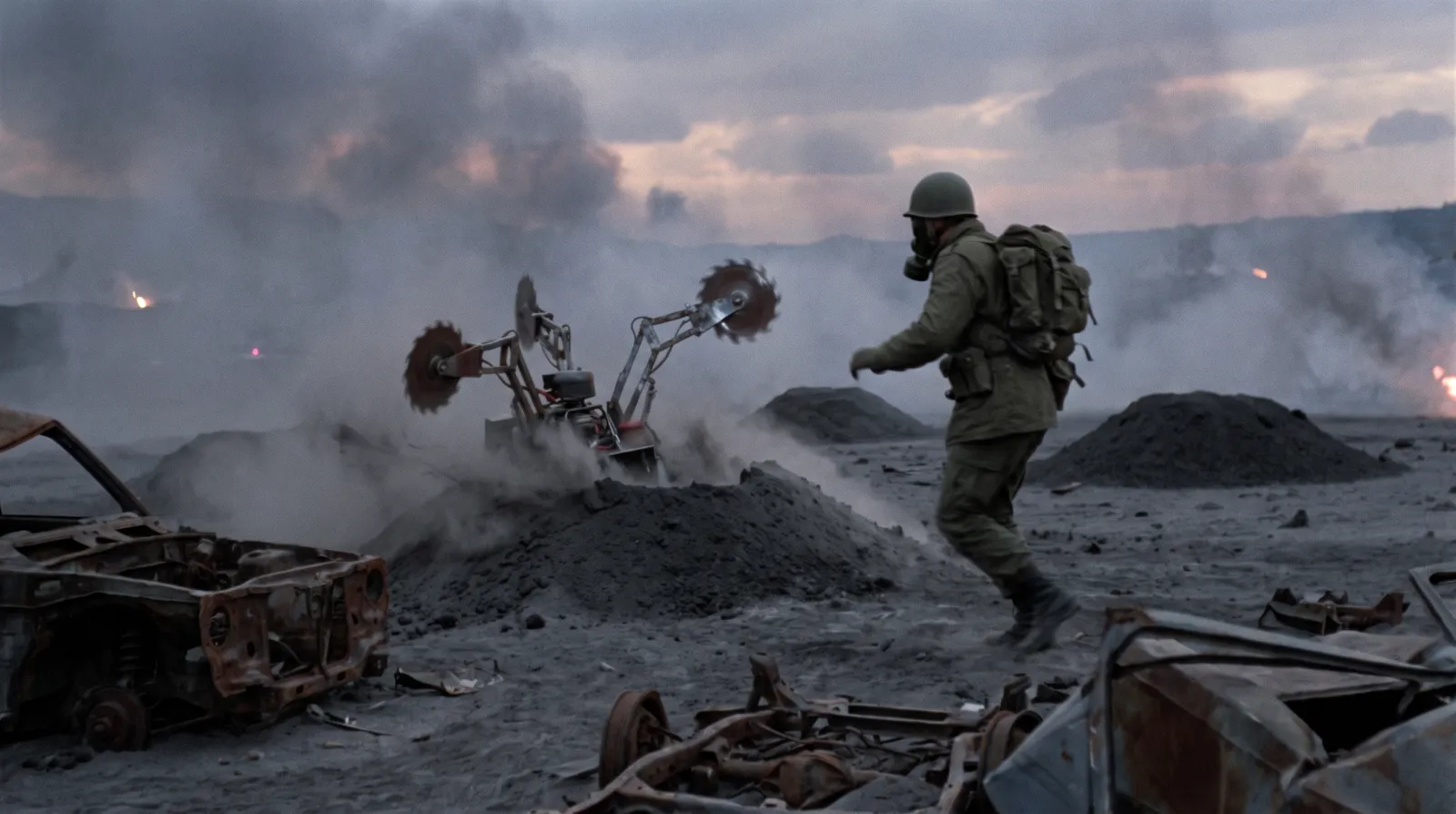
A SCREAMER bursts from the ash at a fleeing Front soldier on the Wandle flats, Sector 7, at dusk on 12 October. Two more mounds wait, left of frame. The soldier, Pte Ruth Oyelaran, got away with a torn boot.
The screaming fields: Screamers under the Sector 7 ash
Something knee high is waiting under the ash on the Wandle flats. It is made of sawblades, and you will hear it before you see it. Field notes from the Ashlands.
RESTRICTEDThe ash that came east in September settled thickest on the Wandle flats, south of the causeway the Chaplains hold. Two hand spans of it, grey and soft as flour, from the river to the gasworks. We call it the Ashlands now. The Bureau calls it a 'soil continuity zone' and has fenced none of it, which should have told us something.
On the twelfth, a patrol from Wrench cell crossed the flats at dusk. Halfway over, the ground in front of Pte Ruth Oyelaran stood up and screamed.
What a Screamer is
It is knee high. A squat hub the size of a cooking pot, with four or five jointed arms, and on the end of every arm a serrated sawblade that spins up to a whine you can feel in your fillings. It has no gun and no face. It burrows under the ash, folds its arms flat, and waits. Days, if it has to. It listens to the ground.
When something heavy enough walks over it, it comes up. The shriek is the blades spinning up all at once, with a siren under it to freeze you in place. Then it leaps, a good two metres, blades first, at shin height and then higher. Oyelaran had half a second of warning and used all of it. She lost the heel of her boot and not the heel of her foot.
You hear it scream and every bone in you says stop. Don't stop. Stopping is what it's for. (Pte Ruth Oyelaran, Wrench cell)
Reading the ground
A Screamer leaves a mound: a low hump in the ash, no bigger than a sleeping cat, a little smoother than the ground around it. In dry weather you will not see it. In wet weather the ash crusts everywhere except over the hub, where the motor keeps it warm, so it stays soft and a shade darker. Go out after rain. Go out in the morning, when the frost shows the warm spots.
The Sexton sweeps along the ring road make sense now. They never set foot on the flats. They drive us onto them.
Stake and rag
Every path across the Ashlands is now marked, and the marks are law.
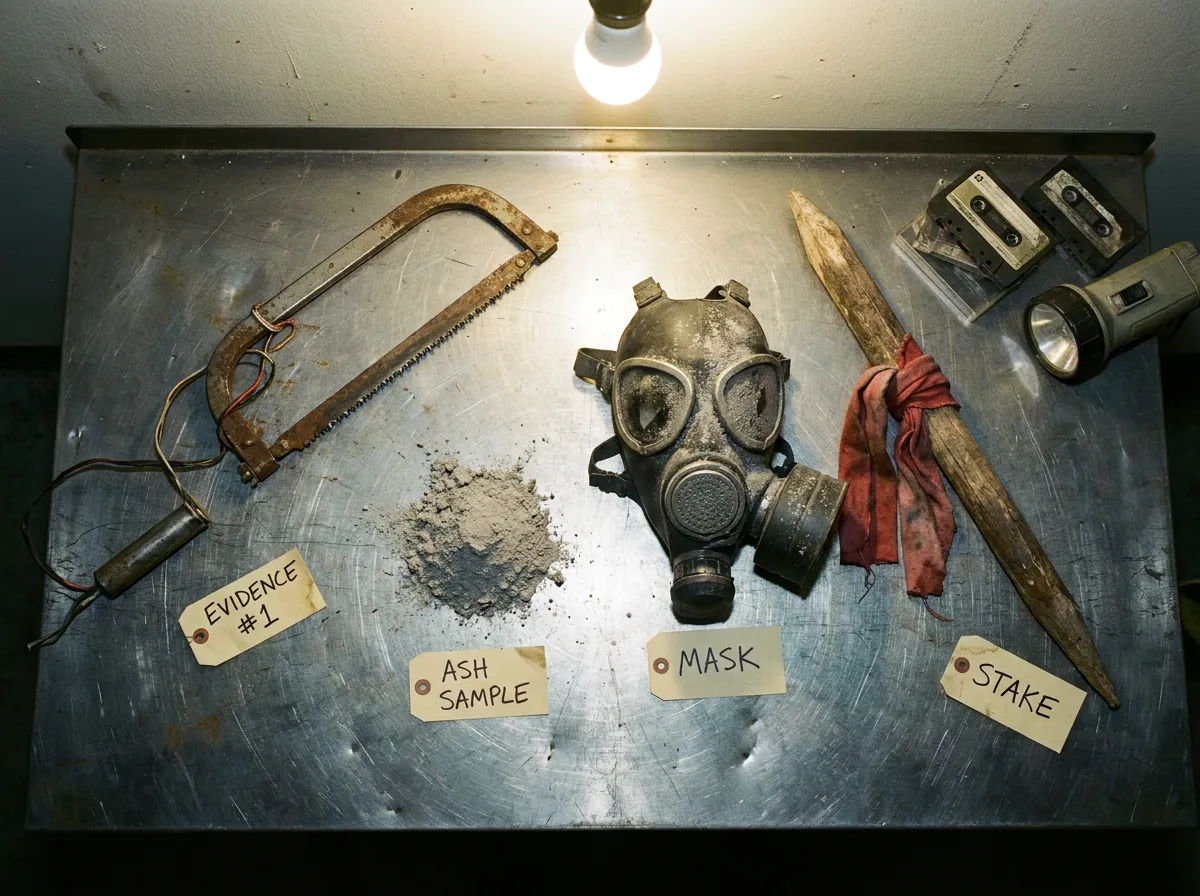
- A red rag on a stake is a confirmed mound. Nobody goes within ten paces. A white rag is a cleared lane, walked single file, stepping in the prints of the person in front.
- Unmarked ground is live ground. Drag a weighted sledge of scrap on a long rope ahead of you; they rise for weight, and a sledge does not mind being screamed at.
- If one rises, get steel between you and it: a riot shield, a car door, a sheet of corrugated iron. The blades jam on steel for a second or two. A pick into the hub finishes it. A shovel of wet ash in the arms stalls it.
- Never run in a straight line back the way you came. Where there was one, assume the ground is sown.
We have staked forty-one red rags since the twelfth. Tinker_9 has one of the hubs on the bench and says the blades are cut from old circular saws, the kind every Midlevels timber shop used to have. The Continuance built a minefield out of our own tools and hid it in our own ash. Walk the white lanes, and walk them after rain.
Filed by KILO-DECK. Transcribed from tape. #screamer #ashlands #sector7 #fieldcraft